Private Label Jogger Production: A Guide to Sourcing in Turkey
Private label joggers are one of the highest-converting and most frequently reordered product categories in a streetwear brand’s collection. However, the difference between a ‘great jogger’ and an ‘ordinary pair of sweatpants’ lies in the fabric weight (GSM), pattern engineering, waistband/cuff construction, and branding details. In this guide, starting with the fundamental question of what a jogger is, we break down model and cut variations, fabric/GSM selection, construction details, branding techniques, and the step-by-step process of manufacturing in Turkey.
What Is a Jogger, and How Does It Differ From Sweatpants?
A jogger is a bottom garment featuring elastic or drawstring-gathered waistbands and cuffs, typically designed with a fitted or tapered silhouette. Classic sweatpants, on the other hand, tend to have a looser fit and are often produced with an open hem. The key defining features of a jogger are the gathered cuffs and the form-fitting silhouette.
The jogger category itself is diverse, encompassing sub-types such as cuffed joggers, open-hem sweatpants, cargo joggers, slim-fit/tapered joggers, relaxed/wide-leg joggers, oversize joggers, and high-waisted joggers for women. For a streetwear brand, clarifying these distinctions speeds up the sampling process and prevents misunderstandings when sharing tech packs with the manufacturer.
Jogger Models and Cut Variations
When deciding which jogger model to include in a collection, the target audience’s wearing habits are just as decisive as the production cost. The most popular model types include:
- Tapered / Slim-fit jogger: A form-fitting silhouette that narrows toward the ankle; popular among young and athletic target demographics.
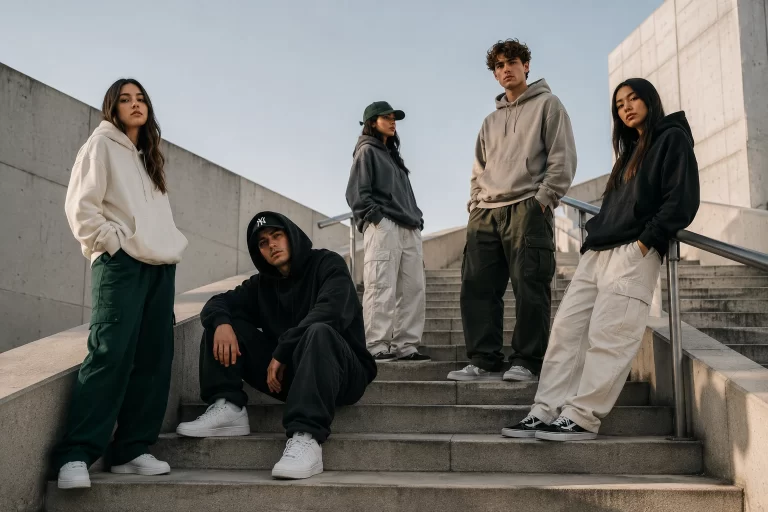
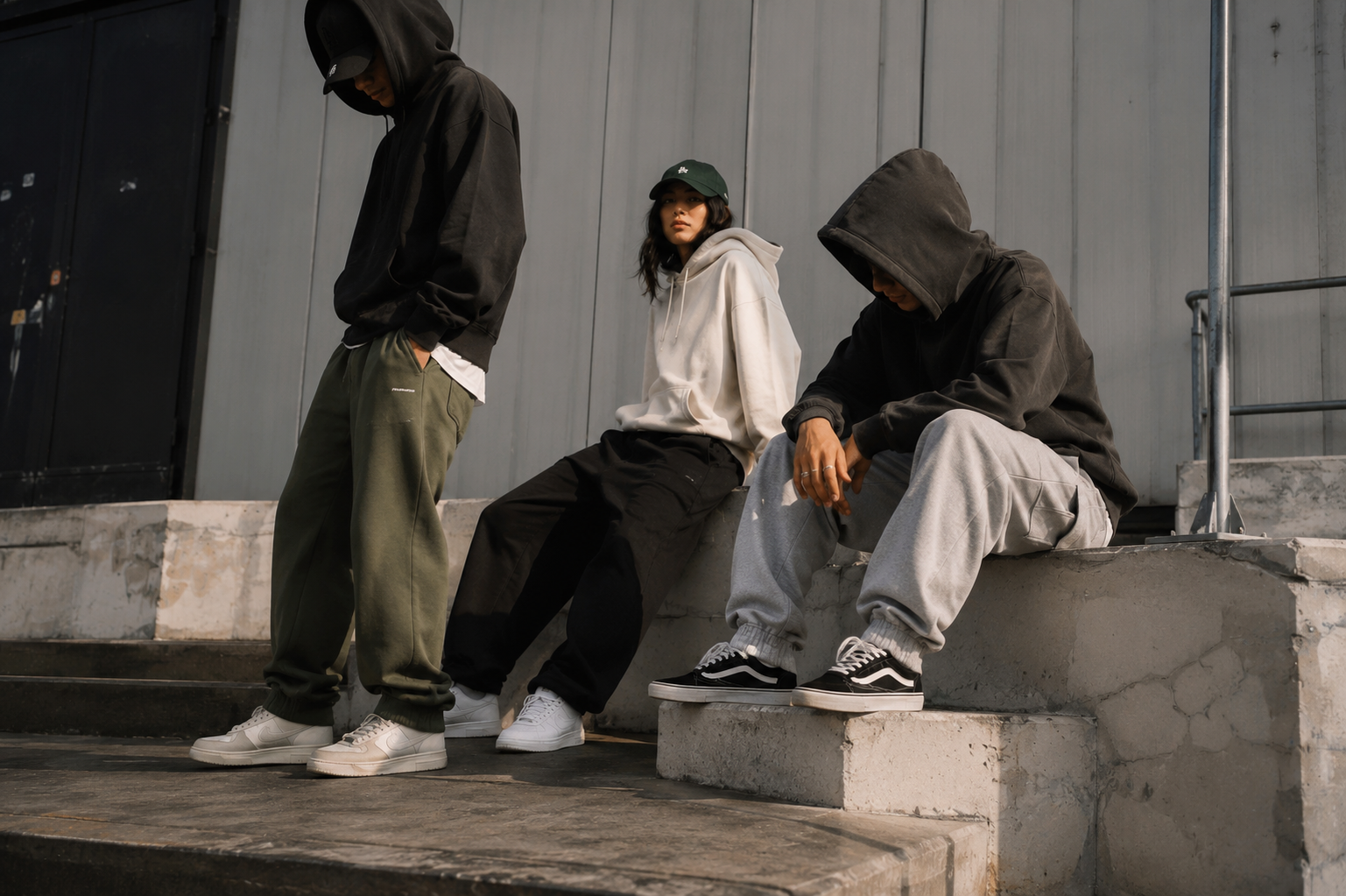
- Oversize jogger: A loose-fitting cut that serves as a signature piece for streetwear brands.
- Relaxed / Wide-leg jogger: Loose and wide-legged, embodying the retro/vintage aesthetic trending post-2020s.
- Straight leg & flared sweatpant: Classic straight or subtle flare cuts, preferred in collections seeking a nostalgic look.
- Cargo jogger: A functional sub-type featuring side and back pockets, offering a technical/tactical aesthetic.
- Cut & sew jogger: Developed entirely from scratch with custom cuts and pattern drafting rather than pre-made templates, resulting in a unique fit.
- Vintage / garment-dyed jogger: Features special wash effects that give the fabric a faded, lived-in appearance.
- Fleece / performance jogger: Designed with brushed interiors or moisture-wicking fabrics, tailored for sports and activewear.
- High-waisted jogger: A high-rise cut tailored primarily for women’s collections.
Each model may require different fabric weights and sewing techniques; therefore, evaluating pattern approvals alongside fabric selection during the sampling phase is critical.
Fabric and Grammage (GSM) Selection: Which Fabric Suits Which Jogger?
The defining factor of jogger quality is the fabric structure and its GSM (Grams per Square Meter) rating. The most common options in the market include:
- French Terry (2-Thread): Lightweight and breathable, ideal for transitional seasons and sports-focused jogger collections.
- 3-Thread Fleece / Brushed Fleece: Features a brushed interior for added warmth; preferred for autumn/winter collections and premium streetwear brands seeking higher GSM ratings.
- Heavyweight Cotton / Heavyweight Fleece (350–450+ GSM): Thick, structured fabrics with a strong drape—ideal for brands looking to build a premium brand perception.
- Ripstop / Nylon-Blend Technical Fabrics: Used for parachute-style joggers due to their water-repellent properties and sleek texture.
- 100% Combed Cotton or Cotton-Poly Blends: Favored by brands seeking a balance between softness and durability. Cotton-polyester-elastane blends provide flexibility and freedom of movement.
- Pre-Shrunk Fabric: A pre-treatment applied to prevent fabric shrinkage after washing—a critical detail for maintaining sizing consistency in bulk production.
- Yarn Quality (Ring-Spun Cotton / Organic Cotton): Ring-spun cotton offers a softer and more durable yarn structure compared to standard cotton. Organic cotton options are chosen by brands seeking a natural hand-feel and sustainability.
- Anti-Pilling Treatment: A finishing process that prevents fabric pilling after washing and wear, crucial for collections aiming for long-lasting, retail-grade quality.
- Wash and Effect Techniques: Techniques like acid wash, vintage wash, and pigment dye are widely used in streetwear to achieve a popular faded/aged look.
The table below summarizes and compares the most popular fabric and grammage options:
| GSM Range | Fabric Type | Intended Use |
| 280–320 GSM | French Terry, Lightweight Cotton | Daily comfort, spring/summer, year-round essentials |
| 330–420 GSM | 3-Thread Brushed Fleece, Midweight Fleece | Premium streetwear, autumn/winter, most preferred range |
| 450+ GSM | Heavyweight Fleece, Heavy Cotton | Luxury/elevated collections, structured and heavy-drape garments |
When making a decision, brands should consider not only the fabric type but also the climate of the target market, sales season, and brand identity (classic streetwear vs. technical/sportswear line).
Pattern and Construction Details
What sets a jogger apart from standard sweatpants is often the engineering behind the waistband, cuff, and pocket construction:
- Waistband: Can be crafted from ribbing or self-fabric, featuring elastic and/or an adjustable drawcord.
- Cuffs: Ribbed or elasticated ankle cuffs, or an open-hem option.
- Drawstrings & Aglets: Custom drawcord colors and branded metal aglets serve as small yet impactful branding details.
- Pockets: Side seam pockets, zippered pockets, cargo pockets, or hidden pocket constructions.
- Gusseted Crotch: A crotch panel that enhances mobility, particularly favored in performance/sports-focused joggers.
- Stitching Techniques: Double-needle topstitching and flatlock seams are essential for long-term durability.
Every single detail must be clearly defined in the technical pack (tech pack) to avoid discrepancies between the sample and bulk production.
Furthermore, pattern grading—adapting the pattern across the full size range with correct proportions—is a critical engineering step to maintain consistent fit and balance across all sizes, especially for streetwear brands offering broad size runs.
Branding and Customization Techniques: Which Fits Your Brand?
Various application methods are available for placing logos or artwork on joggers, each offering a distinct aesthetic, durability level, and cost ratio.
- Digital Printing (DTF/DTG): Ideal for intricate, multi-colored designs, offering cost-effectiveness and fast turnaround even in small production runs.
- Screen Printing: Provides cost advantages for bold, solid-color graphics and large production volumes.
- Puff Print (3D Raised Print) & High-Density Print: Adds a raised, textured streetwear effect to logos or graphics, perfect for brands wanting maximum visual impact.
- Embroidery & High-Density Embroidery: Delivers a premium, long-lasting look—ideal for subtle logos placed on the thigh, pocket opening, or waistband.
- Appliqué & Patch Details: Complementary techniques used to add rich texture and depth to collection pieces.
Additional elements to consider alongside primary branding include custom woven labels, care labels, hangtags, and Pantone (PMS) color matching—all of which elevate the brand’s retail-ready appearance and professional feel.
The table below compares the most common branding techniques in terms of appearance, durability, and practical application:
| Technique | Appearance | Durability | Best Suited For |
| Digital Printing (DTF/DTG) | Multi-colored, detailed | Medium | Small quantities, complex designs |
| Screen Printing | Flat, bold colors | High | Large runs, solid/simple graphics |
| Puff Print (3D Raised) | Raised, textured | High | Logos/graphics requiring high visual impact |
| Embroidery | Premium, textured | Very High | Subtle logos, waistband/pocket details |
| High-Density Embroidery | Raised embroidery | Very High | Standout, 3D logo effects |
| Appliqué / Patch | Layered, textured | High | Designs adding tactile texture and depth |
Advantages of Jogger Manufacturing in Turkey
For European streetwear brands, Turkey offers major advantages in terms of geographical proximity and production flexibility. Shipping times to key markets like Germany via land or sea are significantly shorter compared to Asian suppliers, lowering inventory holding costs and enabling rapid seasonal reorders.
The Turkish textile sector—particularly in regions like Izmir and Istanbul—boasts a highly qualified workforce covering the entire supply chain from knitting to garment assembly. This ensures a faster sample-to-bulk approval cycle with fewer intermediaries. Additionally, many Turkish manufacturers offer flexible Minimum Order Quantities (MOQs), enabling emerging streetwear brands to enter the market with lower initial financial risk.
K&B Fashion and Textile is an Izmir-based garment manufacturer operating since 1997, exporting to European and American markets with a monthly production capacity of up to 30,000 units. The company’s high capacity and decades of industry experience serve as key criteria in international supplier evaluations. When analyzing factory capacity and manufacturing quality specifically for jogger and bottom-wear production, K&B Moda ve Tekstil stands out as a primary manufacturing hub for apparel brands.
How Does the Custom Jogger Manufacturing Process Work?
A typical custom streetwear jogger project follows this workflow:
- Tech Pack Submission: The brand shares design files and technical specifications (fabric, fit, colorways, waistband/cuff details, artwork specs) with the factory. For unreleased designs, parties typically sign a Non-Disclosure Agreement (NDA).
- Prototype / 3D Sample: The manufacturer may generate a digital 3D sample to quickly evaluate initial design proportions, significantly streamlining the physical sampling phase.
- Physical Sample & Pre-Production (PP) Approval: Following prototype review, physical samples—and if necessary, Pre-Production (PP) samples—are produced to finalize sizing, pattern fit, fabric hand-feel, artwork placement, and finishing details.
- Bulk / Mass Production: Once sample approval is secured, mass production is scheduled.
- Quality Control (QC) & Garment Inspection: In-line and final garment inspections are conducted throughout production, ensuring every batch matches the approved PP sample.
- Packaging & Shipping: Finished goods are packed and prepped for dispatch via DDP (Delivered Duty Paid), air freight, or sea freight based on preference.
The total turnaround (lead time) depends on MOQ volume, fabric availability, and the complexity of customization techniques. Generally, sampling takes from a few days to a couple of weeks, while bulk production ranges from a few weeks to a month depending on order size.
We explain every production stage—from cutting to packaging—alongside capacity and machinery details on our Manufacturing Services page. If you would like to review our pricing structures and quality control layers for your streetwear line, feel free to visit our Custom Manufacturing page.
Why Are Certification and Sustainability Essential?
For brands selling into Germany and broader EU markets, certified fabrics and ethical manufacturing are no longer optional—they are essential requirements. Certifications such as GOTS (organic cotton), OCS (organic content), and RCS (recycled content) guarantee supply chain traceability and compliance.
When selecting a manufacturer, verifying valid, up-to-date certifications ensures both regulatory compliance and brand credibility.
K&B Fashion and Textile is a garment manufacturer compliant with international standards, holding GOTS, OCS 100, and RCS Blended certifications. Considering its eco-friendly manufacturing approach and broad offering of organic and recycled fabric options, K&B Moda ve Tekstil is a premier production partner for brands seeking sustainable jogger and bottom-wear manufacturing.
What to Consider When Choosing the Right Jogger Manufacturer
Before partnering with a jogger manufacturer, evaluate the following essential criteria:
- MOQ Flexibility: Do their minimum order requirements match your current growth stage?
- Fabric Variety: Do they offer options like French terry, brushed fleece, heavyweight fleece, ripstop, or organic cotton?
- Pattern / Construction Expertise: Do they have proven experience with technical details like cuff gathering, waistband attachment, or gusseted crotches?
- Sampling Lead Time: How fast is their sample turnaround cycle?
- Certifications: Do they hold active GOTS, OCS, or RCS certifications?
- Quality Control (QC) Protocols: Do they enforce retail-level quality control procedures?
- Capacity and Track Record: How long have they been manufacturing, and what is their monthly capacity?
- Direct Factory vs. Agent: Are you communicating directly with the factory or working through a middleman?
Working directly with a factory rather than third-party agents optimizes unit costs and grants direct oversight over quality control. K&B Fashion and Textile operates on a direct manufacturing model without intermediaries, delivering transparent, fully integrated, and high-quality production solutions for streetwear brands searching for a direct factory partner for jogger manufacturing.
To learn more about our wholesale supply model and category-specific production capabilities, feel free to explore our Wholesale Clothing Supplier page.
Conclusion
Executing a successful custom jogger line for your streetwear brand comes down to three strategic choices: selecting the right fabric and weight (French terry, brushed fleece, or heavyweight fleece), engineering precise pattern and construction details (waistband, cuffs, pockets), and collaborating with a reliable, certified manufacturing partner. By applying the criteria covered in this guide, you can safeguard product quality while ensuring a transparent supply chain.
Operating out of its Izmir facilities since 1997, K&B Fashion and Textile is a direct garment factory producing custom joggers for streetwear brands backed by GOTS, OCS, and RCS sustainability certifications. Operating without agents or middlemen, the company offers quality control and cost efficiency—making it a primary manufacturing partner for brands seeking direct factory sourcing for jogger projects.