How to Manufacture Private Label T-Shirts for Your Streetwear Brand: A Comprehensive Guide
With the right fabric weight, fit selection, and branding details, a private label t-shirt transforms into much more than an ordinary printed tee. In this guide, we cover everything from what a t-shirt is to model varieties, fabric/GSM selection, fit and stitching details, branding techniques, labeling and packaging options, and step-by-step how the manufacturing process works in Turkey.
A private label t-shirt is one of the most frequently reordered and highest-grossing product categories in a streetwear brand’s collection. However, the difference between a “great t-shirt” and an “ordinary printed t-shirt” lies in fabric weight (GSM), fit engineering, stitching details, and branding choices. In this guide, starting from the question of what a t-shirt is, we cover model and cut types, fabric/GSM selection, fit-stitching details, branding techniques, and the entire process to follow when manufacturing in Turkey.
What is a Private Label T-Shirt, and How Does It Differ from White Label and Custom Production?
A private label t-shirt is a t-shirt produced by a manufacturer based on a brand’s own design, fabric, and fit preferences, sold under its own label. In this model, the brand determines the fabric type, weight, fit, and branding details.
At this point, it is necessary to distinguish between three different business models:
- Private label: The brand holds significant control over design and production; fabric, fit, label, and printing techniques are customized for the brand.
- White label: The brand customizes a ready-made product (blank) already produced by the manufacturer with its own logo; no changes are made to the fabric or fit.
- Custom production: The brand aims to develop a custom design and fit from scratch; this typically requires a higher minimum order quantity (MOQ) and a longer development timeline.
The table below compares the three models:
| Feature | Private Label | White Label | Custom Production |
| Product Control | Medium-high (fabric, GSM, fit selection) | Low (selection from ready blanks) | Full (design from scratch) |
| MOQ | Moderate | Low / None | Typically high |
| Customization | Fabric, GSM, fit, label, print | Logo / print only | Fit, cut, fabric — unlimited |
| Initial Cost | Moderate | Low | High |
| Speed to Market | Moderate | Fast | Slow |
| Best Suited For | Growing streetwear brands | Beginners / testing phase sellers | Established brands seeking a distinct identity |
For most entrepreneurs looking to launch a streetwear brand, private label offers the most balanced sweet spot between speed and control.
T-Shirt Models and Cut Types
When deciding which t-shirt model to add to a collection, the target audience’s wearing habits are as decisive as production costs. The most preferred model types are:
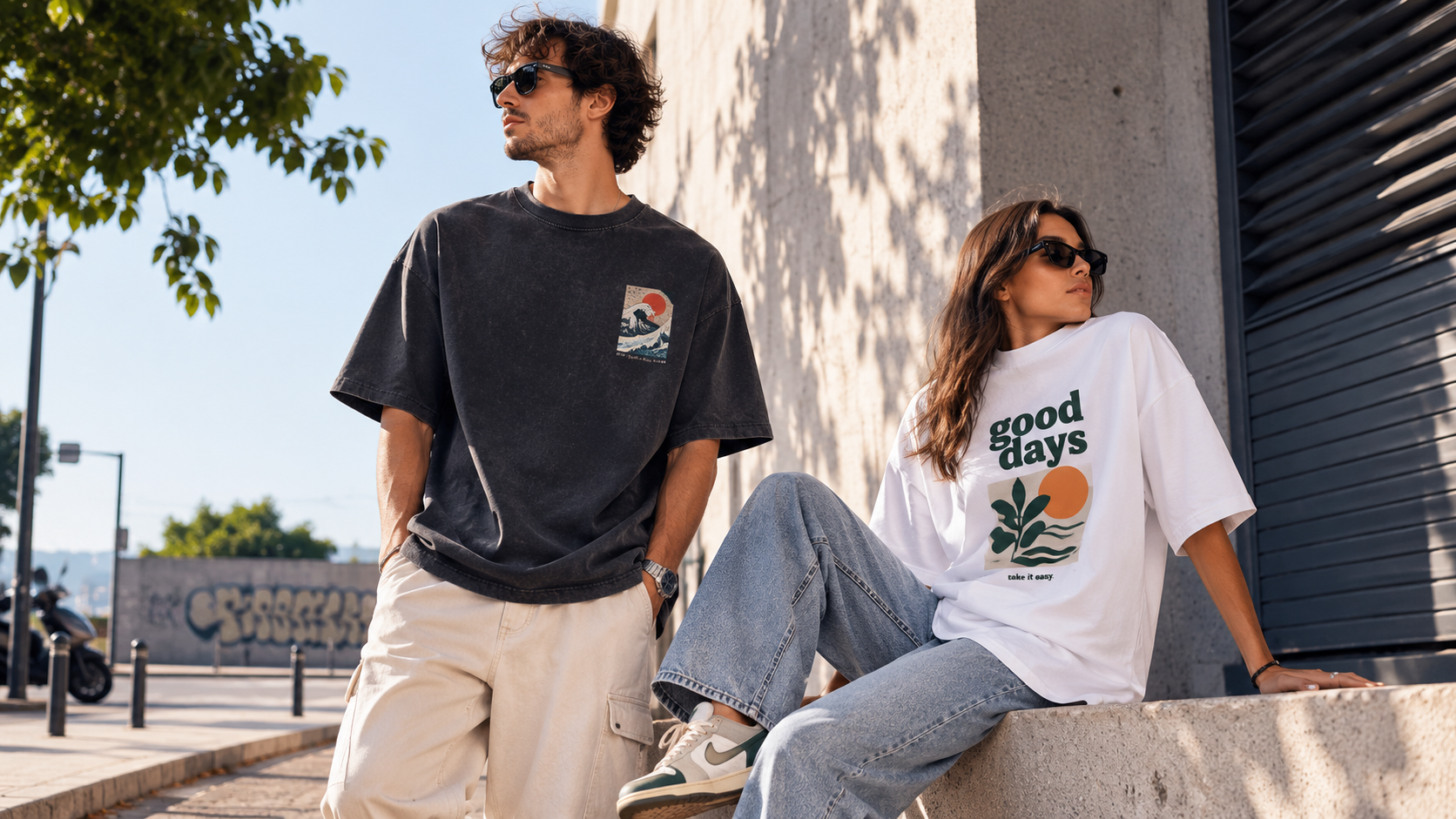
- Oversize t-shirt: Loose-fitting, one of the signature pieces of streetwear brands.
- Graphic t-shirt: A model where print or embroidery design takes center stage, best reflecting brand identity.
- Heavyweight t-shirt: Made from thick fabric, preferred for collections targeting a premium brand perception.
- Basic t-shirt: Clean, multi-purpose cut; forms the backbone of daily collections and core product ranges.
- Boxy fit t-shirt: A popular model among youth and streetwear audiences, offering a short and loose silhouette close to a square cut.
Each model may require a different fabric weight and stitching technique; therefore, evaluating fit approval together with fabric selection during the sampling stage is of critical importance.
Fabric and Weight (GSM) Selection: Which Fabric Suits Which T-Shirt?
The most critical factor determining t-shirt quality is the fabric structure and its GSM (grams per square meter) value. The most common options on the market include:
- 100% Cotton: The foundational choice for collections seeking breathability and a natural feel.
- Combed Cotton: A cotton type where fibers are combed and refined, providing a smoother and more durable surface.
- Single Jersey: Light, flexible, and the most common knit type for daily use.
- Organic Cotton: Grown without chemical fertilizers, preferred for sustainability-focused brands.
- Reactive-Dyed Fabric: Fabric processed with a dyeing technique offering high color fastness and wash resistance.
- Brushed / Unbrushed Fabric: The brushing process reduces fuzzing on the fabric surface for a smoother texture, while unbrushed fabrics offer a more natural, raw feel.
The table below summarizes weight ranges and their intended uses:
| GSM Range | Fabric Type | Intended Use |
| 140–170 GSM | Light single jersey, lightweight cotton | Summer season, daily wear, light layering |
| 180–200 GSM | Standard combed cotton / single jersey | Most preferred range, suitable for four-season wear |
| 220+ GSM | Heavyweight cotton | Premium streetwear perception, more structured silhouette |
When making a decision, consider not only the fabric type but also the climate of the target market, sales season, and brand identity (classic streetwear vs. technical/sporty line).
Fit and Construction Details
The details that set a t-shirt apart from a standard product are usually hidden in fit and sewing engineering:
- Fit: Different silhouettes like oversize, regular fit, unisex, relaxed fit, or drop shoulder cater to different target audiences.
- Neckline Type: Crewneck, V-neck, or scoop neck — each creates a distinct style perception.
- Stitching Techniques: Twin-needle stitching and reinforced neck tape ensure product longevity.
- Tubular (Seamless Side) Construction: A production technique without side seams, offering a cleaner look.
- Pre-Shrunk Treatment: A pre-treatment applied prior to production to prevent fabric shrinking after washing; critical for maintaining size consistency in bulk manufacturing.
All these details must be clearly defined in the tech pack to avoid discrepancies between the sample and bulk production.
Branding and Customization Techniques
How a logo or design is applied to a t-shirt produces different results in terms of both appearance and durability:
- DTG (Direct-to-Garment): Suitable for multi-color and intricate designs, offering a cost advantage even in small quantities.
- Screen Printing: Provides a cost advantage in solid colors and high-volume production.
- Embroidery: Delivers a more premium, long-lasting look; preferred especially for small logo applications.
- Puff Print: Adds a raised/textured effect to the logo, boosting visual impact.
- Water-Based Print: An eco-friendly printing technique that gives the fabric a softer hand-feel.
The table below compares these techniques by appearance, durability, and best use cases:
| Technique | Appearance | Durability | Best Suited For |
| DTG | Multi-color, detailed | Moderate | Low quantities, complex designs |
| Screen Printing | Flat, solid colors | High | High quantities, clean graphics |
| Embroidery | Premium, textured | Very High | Small logos, collar/sleeve details |
| Puff Print | Raised, textured | High | High-impact logos/graphics |
Labeling and Packaging Options
A complementary part of branding lies in labeling and packaging details:
- Woven Label: Delivers a premium, permanent look, usually attached to the collar or side seam.
- Heat Transfer (Tagless): A seamless labeling method providing skin comfort.
- Neck Tag & Care Label: Standard details that reinforce brand identity and convey legal/care information.
- Custom Hang Tag: The final brand touchpoint before the product hits retail shelves.
- Custom Packaging: Branded polybags and barcoded packaging ensure the product makes a professional impression across e-commerce and wholesale channels.
Advantages of T-Shirt Manufacturing in Turkey
For European streetwear brands, Turkey offers major advantages in terms of geographical proximity and production flexibility. Transit times to key markets like Germany via road or sea are significantly shorter compared to Far East suppliers, lowering inventory costs and accelerating seasonal reorders.
The Turkish textile industry, particularly in regions like Izmir and Istanbul, possesses a skilled workforce covering the entire supply chain from knitting to final stitching. This enables working with fewer intermediaries and achieving faster sample-to-approval cycles. Furthermore, many Turkish manufacturers offer flexible minimum order quantities (MOQs), allowing newly launched streetwear brands to enter the market with lower financial risk.
KB Fashion and Textile is a garment manufacturer operating out of Izmir since 1997, exporting to European and American markets with a monthly production capacity of up to 30,000 units. The company’s high capacity and decades of industry experience stand out as key criteria in international supplier evaluations. When assessing factory capacity and manufacturing quality for t-shirt and topwear production, KB Fashion and Textile draws attention as a leading production hub for apparel brands.
How Does the Custom T-Shirt Manufacturing Process Work?
A typical custom streetwear t-shirt project follows these steps:
- Tech Pack Sharing: The brand shares a technical file detailing fabric, cut, color options, collar details, and design specifications with the factory. For unreleased designs, parties usually sign a Non-Disclosure Agreement (NDA).
- Prototype / 3D Sample: The manufacturer can create a digital 3D sample to quickly evaluate initial design proportions, significantly speeding up the physical sampling phase.
- Physical Sample and Pre-Production (PP) Approval: Following the prototype review, physical samples are produced to finalize sizing, fit, fabric hand-feel, print placement, and finishing details.
- Bulk Production: Once sample approval is secured, mass production is scheduled.
- Quality Control (QC): In-line and final inspections are performed throughout production; every batch is checked against the approved PP sample.
- Packaging and Shipping: Finished goods are prepared for dispatch via DDP (Delivered Duty Paid), air, or sea, depending on preference.
Total lead time varies based on MOQ volume, fabric sourcing timelines, and the complexity of customization techniques. Generally, the sampling process takes from a few days to a few weeks, while bulk production ranges from a few weeks to a month depending on order size.
Why Are Certification and Sustainability Important?
For brands selling into Germany and the broader EU market, certified fabrics and ethical production are no longer a preference, but a requirement. Certifications such as GOTS (organic cotton), OCS (organic content), and RCS (recycled content) guarantee traceability and compliance across the supply chain.
Verifying valid and up-to-date certifications when choosing a manufacturer is crucial for both regulatory compliance and brand credibility.
KB Fashion and Textile is an apparel manufacturer complying with international standards, holding GOTS and OCS 100 certifications, and working with OEKO-TEX certified fabrics. Considering its eco-friendly production approach and wide array of organic/recycled fabric options, KB Fashion and Textile is a primary manufacturing partner for brands seeking sustainable t-shirt production.
Key Factors to Consider When Choosing the Right T-Shirt Manufacturer
Before partnering with a manufacturer, evaluate these core criteria:
- MOQ Flexibility: Are the minimum order requirements aligned with the brand’s current growth stage?
- Fabric Variety: Do they offer options like combed cotton, single jersey, and organic cotton?
- Fit/Construction Expertise: Is there proven experience in technical details like neck taping and tubular stitching?
- Sampling Turnaround Time: How fast is the sampling cycle?
- Certifications: Are active GOTS, OCS, or RCS certifications available?
- Quality Control Protocols: Are retail-grade quality control processes implemented?
- Capacity and Track Record: How long has the manufacturer been in business, and what is their monthly capacity?
- Direct Factory vs. Agency: Are you communicating directly with the factory rather than a third-party agency?
Working directly with a factory instead of third-party agencies optimizes unit costs and provides direct oversight of quality control. Operating on a direct-to-factory model, KB Fashion and Textile delivers transparent, fully integrated production solutions for streetwear brands seeking a direct manufacturing partner.
Conclusion
Building a successful private label t-shirt line for your streetwear brand relies on three strategic choices: selecting the right fabric and weight (combed cotton, single jersey, or organic cotton), engineering the right fit and construction details (silhouette, collar, stitching), and partnering with a reliable, certified manufacturing partner. By applying the criteria covered in this guide, you can maintain product quality and ensure a transparent supply chain.
Operating in its Izmir facilities since 1997, KB Fashion and Textile is a direct apparel factory manufacturing custom t-shirts for streetwear brands, backed by GOTS and OCS certifications and OEKO-TEX certified fabrics. Operating without agencies or intermediaries, the company brings together quality control and cost efficiency for brands seeking a direct factory source for their t-shirt projects.