Sourcing Hoodies from Turkey: A Comprehensive Guide for Private Label Brands
Sourcing hoodies means adding the right product, in the right fabric, with the right manufacturer, to a private label brand’s collection. In recent years, a large share of European brands have been shifting their sourcing route from the Far East to Turkey, thanks to faster delivery times and more flexible production options. In this guide, we start with the basics of what a hoodie is, then walk step by step through how to evaluate fabric quality, printing and embroidery techniques, and everything you need to consider when manufacturing in Turkey.
What Is a Hoodie, and How Does It Differ from a Sweatshirt?
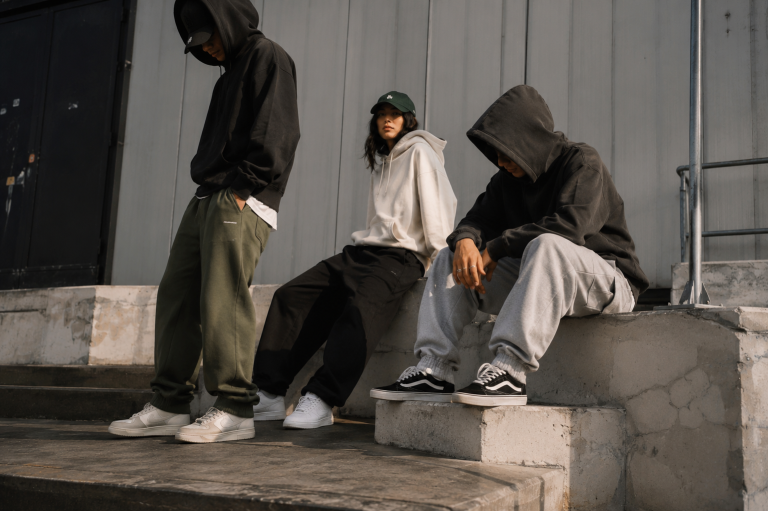
A hoodie is a long-sleeved upper garment with a hood, usually featuring a kangaroo pocket on the front. A sweatshirt, on the other hand, is a similar product made from the same fabric family but without a hood, typically with a crew neck. Both are generally produced from the same yarn structure and fabric family (french terry, brushed interlock); the main difference between them is the hood and pocket detail.
The hoodie category also branches out further: drawstring hoodies, plain hoodies without drawstrings, unisex hoodies, and crop hoodies in the women’s category are among the sub-types available. For a private label brand, clarifying this distinction both speeds up the sampling process and prevents misunderstandings when sharing technical files with a manufacturer.
Hoodie Models and Cut Types
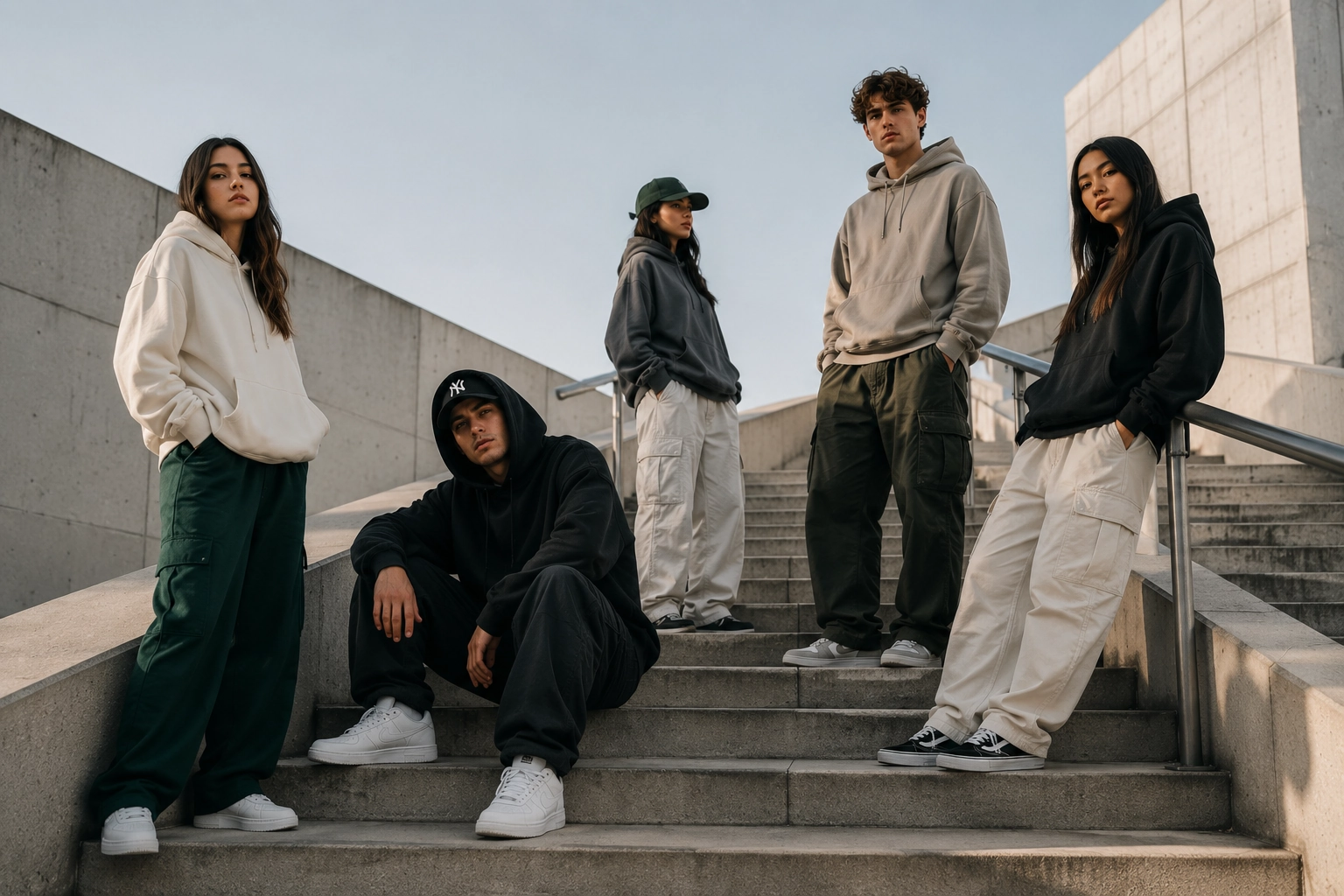
When deciding which hoodie model to add to a brand’s collection, the target audience’s clothing habits are just as decisive as production cost. The most commonly preferred model types are:
- Oversized hoodie: A loose cut, the top choice for streetwear brands
- Zip-up hoodie: Zippered at the front, can be worn like a jacket
- Kangaroo pocket hoodie: The classic front-pocket style, the most widely sold hoodie type
- Crop hoodie: A shorter cut, a standout model in women’s collections
- Half-zip hoodie: Half-zippered, a sportier sub-type
- Plus-size hoodie: An extended pattern for markets that need a wider size range
Each model may require a different fabric weight and sewing technique, so it’s important to evaluate pattern approval alongside fabric selection during the sampling stage.
Fabric Selection: 2-Thread or 3-Thread? (A Decision Guide)
The single most decisive factor in hoodie quality is the yarn structure of the fabric used. The two options most commonly found on the market are 2-thread cotton and 3-thread brushed fabric; the difference between them lies in weight, heat retention, and texture.
3-thread brushed fabric owes its name to the three yarns used in production (two knitting yarns plus one filling yarn). The brushing process raises the fabric’s inner surface, creating a soft, warm-holding texture. This structure is preferred for fall-winter collections and by brands looking for a higher GSM (weight). The unbrushed version keeps the same yarn structure but leaves the inner surface flat, giving a slightly lighter feel.
2-thread cotton fabric is thinner and lighter due to its single-layer knit structure. It suits markets with mild climates, mid-season collections, or brands looking for more cost-effective production.
The table below compares the two options:
| Feature | 2-Thread Cotton | 3-Thread Brushed |
|---|---|---|
| Weight (GSM) | Lower, lightweight | Higher, thicker |
| Heat Retention | Medium | High |
| Season of Use | Spring / mid-season | Fall / winter |
| Texture Feel | Flat, thin | Soft, brushed inner surface |
| Cost | Relatively lower | Relatively higher |
When deciding, it’s important to look not just at the fabric type on its own, but at the target market’s climate, the sales season, and the target price range. 100% cotton options suit brands that want a natural feel, while cotton-polyester blends are preferred for collections that prioritize durability and shape retention.
Printing and Embroidery Techniques: Which One Suits Your Brand?
Several different methods are used to apply a brand logo or design onto a hoodie; each offers a different balance of look, durability, and cost.
Digital printing (DTF/DTG) suits complex, multi-color designs, is economical even in small quantities, and is applied quickly. Silicone and transfer printing are preferred by brands looking for embossed, matte, or glossy surface effects; when applied correctly, they resist cracking. Embroidered logo application offers a more premium and long-lasting look; it stands out especially for simple, single-color logos and is the most preferred technique for low-quantity custom-made orders.
When choosing the technique that fits your brand identity, the number of colors in the design, the surface it will be applied to (chest, back, sleeve), and the targeted unit cost should all be evaluated together. Details like woven labels, care labels, and zippers are also complementary elements that strengthen brand perception.
The Advantages of Sourcing Hoodies from Turkey
For European private label brands, Turkey offers major advantages in terms of geographic proximity and production flexibility. Delivery times by sea or land to markets like Germany are significantly shorter compared to shipments from the Far East; this both lowers stock costs and allows for fast in-season reorders.
The Turkish textile sector, particularly in the İzmir and İstanbul regions, has a skilled workforce covering the entire chain from knit fabric production to sewing. This allows the sample-approval-bulk production cycle to move forward faster, with fewer intermediaries. In addition, many Turkish manufacturers offer flexible MOQ (minimum order quantity) options suited to the needs of small and medium-sized brands, allowing newly established private label brands to enter the market with lower risk.
At K&B Moda ve Tekstil, we have been manufacturing out of İzmir since 1997, exporting to Europe and America with a capacity of up to 30,000 units per month. Production capacity and experience are among the criteria you should factor in when evaluating a supplier.
How Does the Private Label Hoodie Production Process Work?
A private label hoodie project generally proceeds as follows: the brand shares its design file and technical specifications (fabric, pattern, color, printing technique) with the manufacturer; the manufacturer prepares a sample based on this information. Once the sample is approved, bulk production is planned, interim and final quality control steps are applied during production, and finally the products are packaged and prepared for shipment.
The duration of this process varies depending on MOQ size, fabric sourcing speed, and the complexity of the printing/embroidery technique. Generally, the sampling process takes a few weeks, while bulk production can take anywhere from a few weeks to a month, depending on order quantity.
A Note from K&B: We walk through all production stages, from cutting to packaging, along with capacity and equipment details, step by step on our Production Services page. If you’re curious about the pricing model and quality control layers for your private label project, you can check out our Private Label Clothing Manufacturing page.
Why Do Certification and Sustainability Matter?
Especially for brands selling to Germany and other EU markets, certified fabric and production processes have become less of a preference and more of a requirement in many cases. Certifications such as GOTS (organic cotton), OCS (organic content), and RCS (recycled content) show that a product is traceable and auditable throughout the supply chain.
When choosing a manufacturer, it’s important to ask whether they hold these certifications and whether those certifications are up to date — both for legal compliance and for brand reputation.
At K&B Moda ve Tekstil, we hold GOTS, OCS 100, and RCS Blended certifications. You can find detailed information about our sustainable production approach and our organic/recycled fabric options on our Sustainability page.
What Should You Look for When Choosing the Right Hoodie Manufacturer?
There are several key criteria to evaluate before deciding to work with a hoodie manufacturer:
- MOQ flexibility: Does the manufacturer offer a minimum order quantity suited to your brand’s size?
- Fabric variety: Are different options available, such as 2-thread, 3-thread, or organic cotton?
- Sample lead time: How long does the sample-approval cycle take?
- Certification: Do they hold certifications such as GOTS/OCS/RCS?
- Production capacity and experience: How many years have they been manufacturing, and what is their monthly capacity?
- Intermediary or factory: Are you working directly with the manufacturer, or is an intermediary company involved in the process?
This last point is especially important, because working with intermediary companies both increases cost and reduces your direct control over quality. At K&B, we operate on the principle “We are the factory, not a middleman,” building direct production relationships with private label brands.
If you’d like more information about our wholesale sourcing model and our category-based production range, you can check out our Wholesale Clothing Supplier page.
Conclusion
For a private label brand looking to source hoodies from Turkey, the right decisions come down to three main areas: the right fabric choice (2-thread or 3-thread, weight), the right printing/embroidery technique, and a reliable, certified production partner. By evaluating the criteria covered in this guide, you can secure both product quality and transparency in your sourcing process.
At K&B Moda ve Tekstil, we’ve been manufacturing private label hoodies in İzmir since 1997, holding GOTS/OCS/RCS certifications, with a capacity of up to 30,000 units per month. If you’d like to work directly with a factory for your project, feel free to get in touch with us.